 Visual checks are slow and inconsistent
Dents and scratches rely on eyes and oil-stone. Slow, tiring, and people disagree.
 StoneDT

 Customer background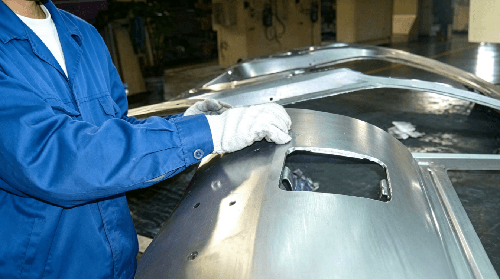
An auto-parts stamper of body skins and inner supports at high volume. Dies, vibration and handling cause dents, scratches, missing holes, edge shortage and local highs/lows. Skin quality shows after paint; missing holes and shortage on structure parts are assembly and safety risks.
QC uses eyes, touch, oil-stone and gauges. Results vary by shift, with no standard, quantified data. The plant needed non-contact, repeatable AOI before paint and downstream.
 Pain points Visual checks are slow and inconsistent
Dents and scratches rely on eyes and oil-stone. Slow, tiring, and people disagree.
Fine scratches and dents are easy to missScratches are finer than dents and need side light. High volume misses a lot; paint makes recovery harder.
No inspection data, quality is hard to traceNo metrics or images. Production, process and quality lack a shared basis.
 Solution
StoneDT AOI with cameras and ring/side lights for shiny, curved stampings. Highlights dents and scratches; images the whole part for missing holes and edge shortage. Marks location and type, PASS/NG, matching high-volume takt.
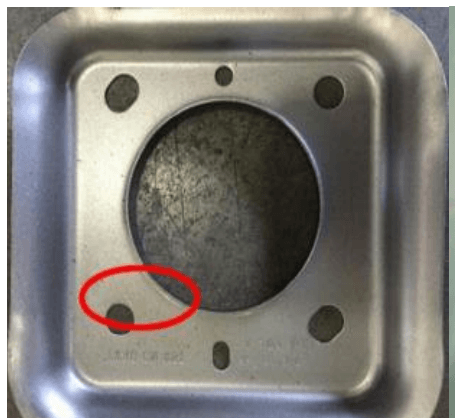
Surface dent
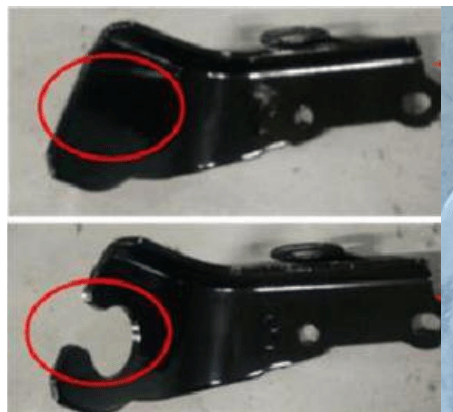
Missing hole
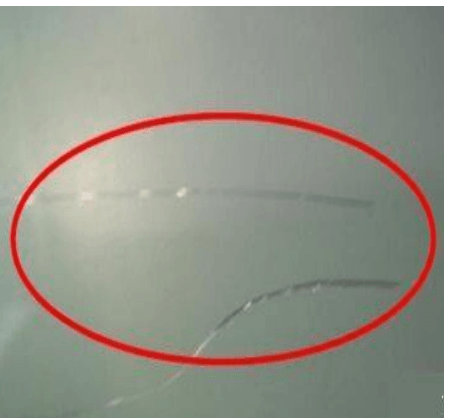
Scratch
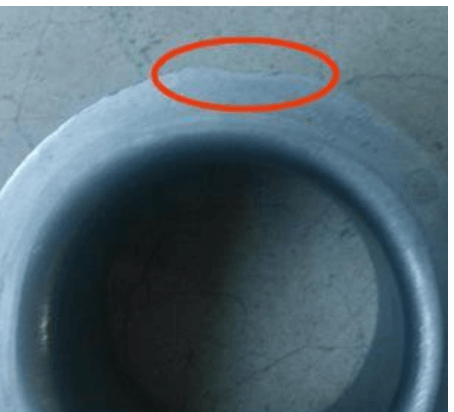
Edge shortage
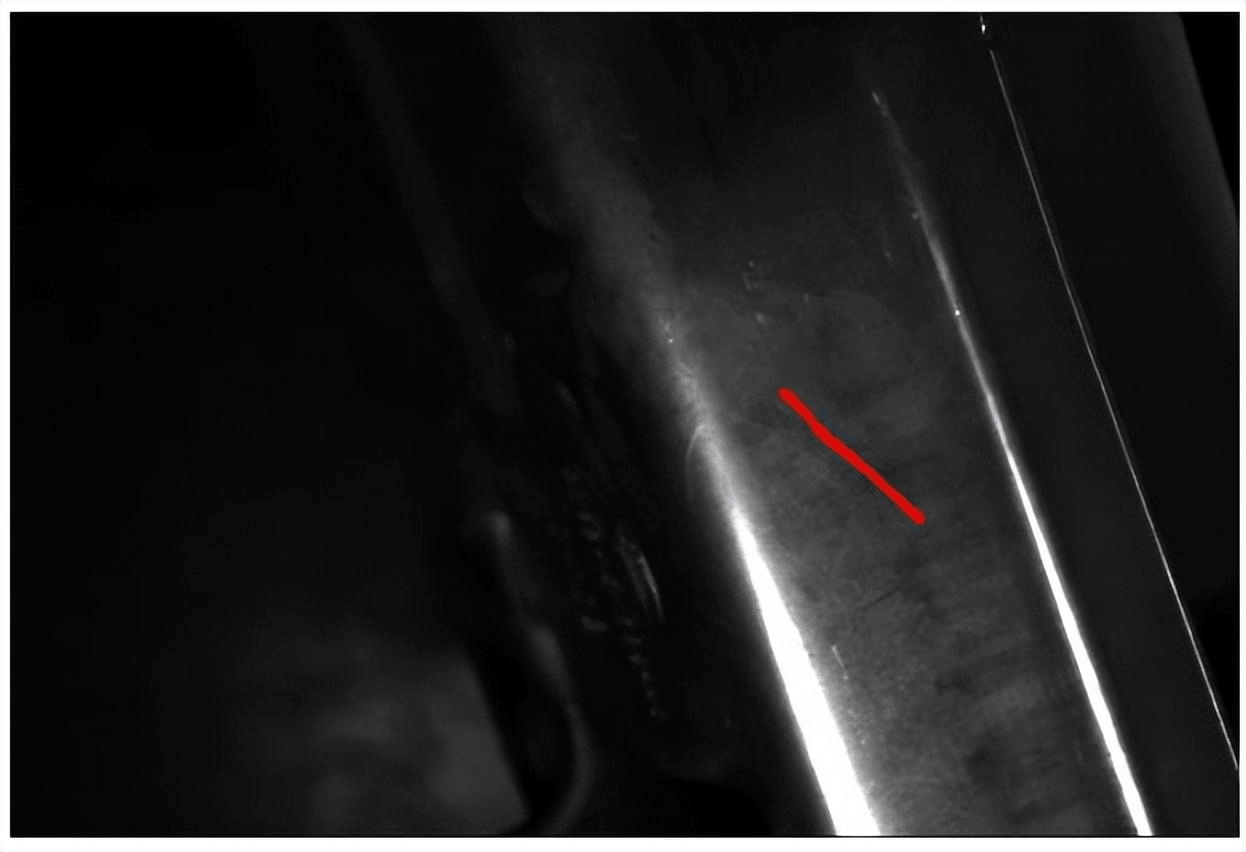
Scratch defect
Images and calls archive into a quantified ledger. Typical defects are found online; fine scratches can reach about 0.1 mm under the right light. NG is stopped before paint or assembly. Stamping QC moves from tribal knowledge to standard, traceable vision.